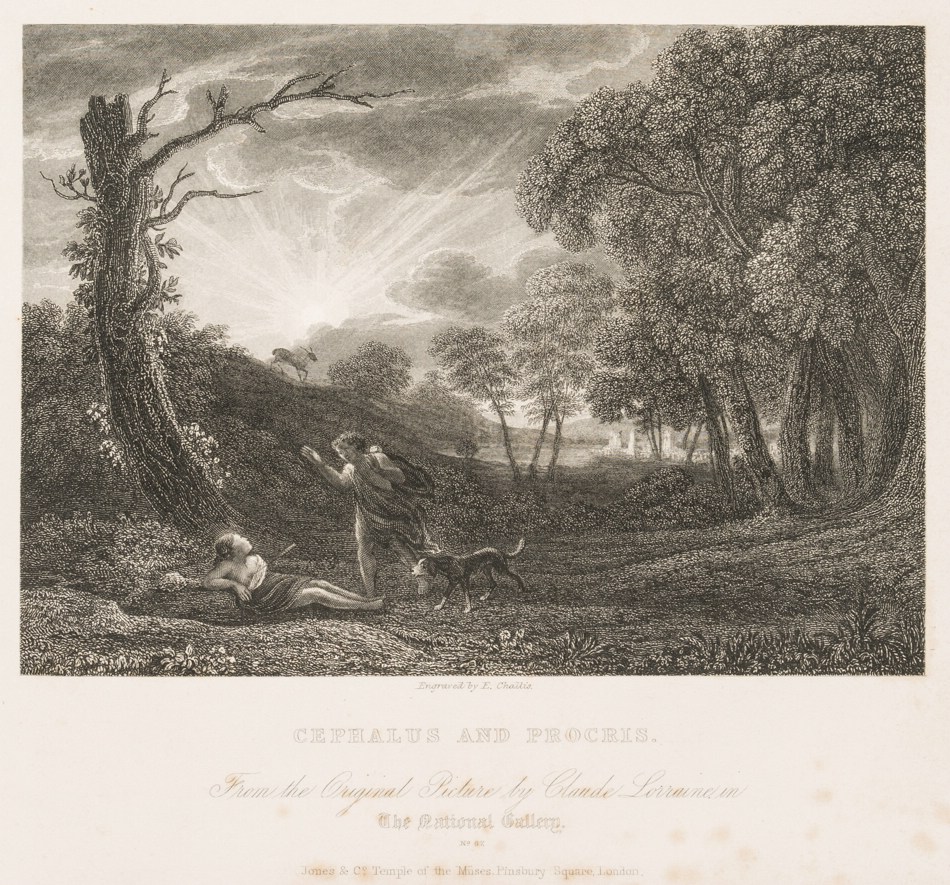
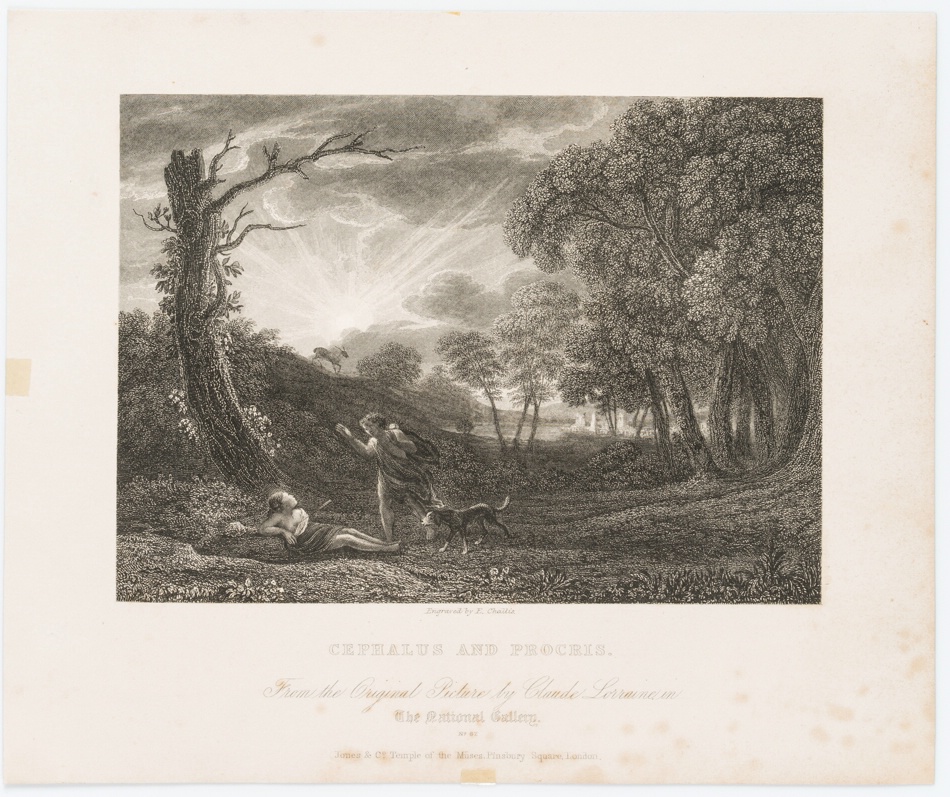
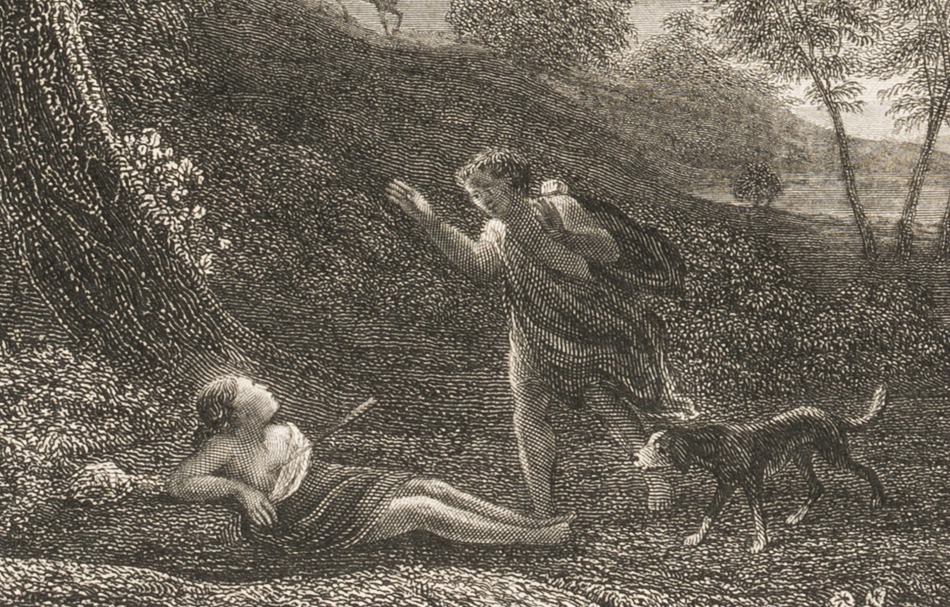
Ebenezer Challis (19. Jahrhundert), KEPHALUS UND PROKRIS, um 1840, Stahlstich
- Technik: Stahlstich auf Papier
- Bezeichnung: Unten mitte signiert: “Engraved by E. Challis.”; unten mitte bezeichnet: “CEPHALUS UND PROCRIS./ From the Original Picture by Claude Lorraine in/ The National Gallery. / N° 67/ Jones & C° Temple of the Muses, Fisnbury Square London”; handschriftliche Anmerkungen auf der Rückseite
- Datierung: um 1840
- Beschreibung: Ein schön ausgearbeites Bild der antiken Sage um Kephalos und Prokris von E. Challis um 1840.
- Schlagworte: Landschaft, Deutschland, Romantik, 1800-1849
- Größe: 19,0 cm x 22,8 cm, Darstellung: 12,5 cm x 17,3 cm
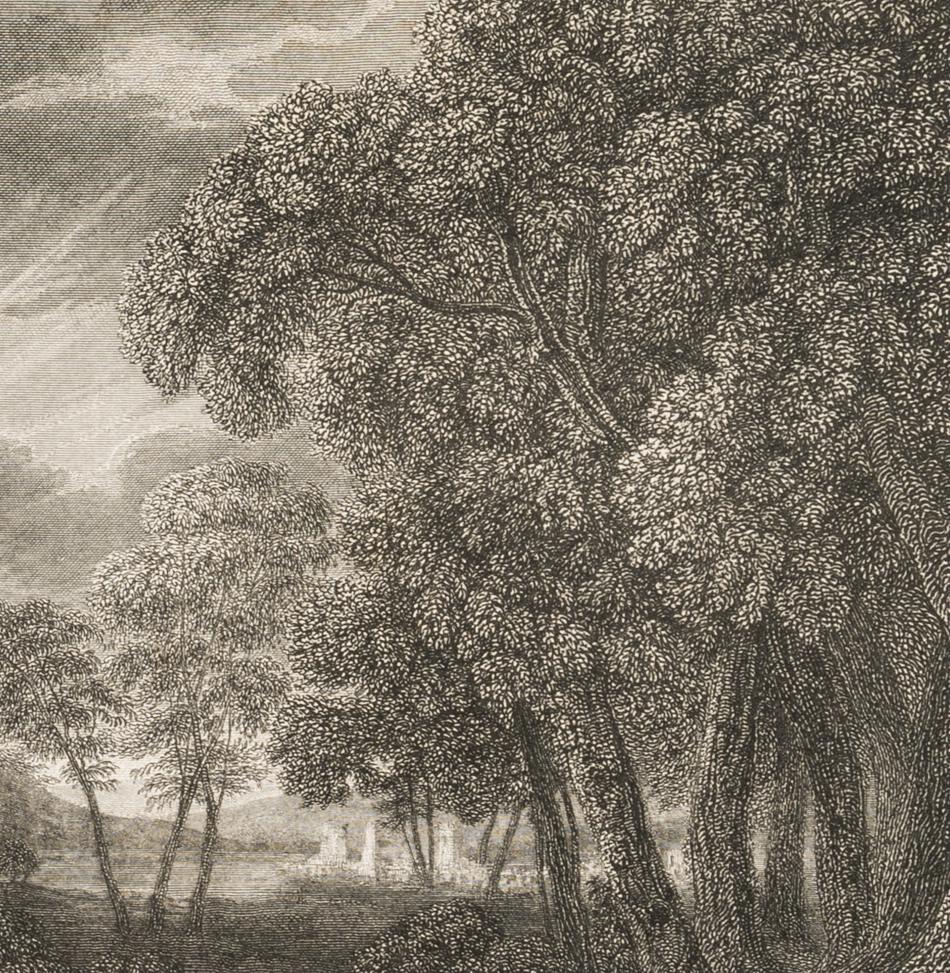
- Zustand: Sehr guter Zustand. Das Papier weist vereinzelt Stockflecke auf. Am linken und unteren Rand befindet sich der Überrest eines Tesastreifens. Die Darstellung macht einen sehr guten Eindruck.
English Version:
Ebenezer Challis (19th century), CEPHALUS AND PROCRIS, c. 1840, Steel engraving
- Technique: Steel engraving on Paper
- Inscription: Signed lower centre: “Engraved by E. Challis.”; inscribed lower centre: “CEPHALUS AND PROCRIS./ From the Original Picture by Claude Lorraine in/ The National Gallery. / N 67/ Jones & C Temple of the Muses, Fisnbury Square London”; handwritten annotations on the reverse.
- Date: c. 1840
- Description: A beautifully executed image of the ancient saga of Cephalus and Procris by E. Challis circa 1840.
- Keywords: , 19th century, Romanticism, Landscapes, Germany,
- Size: 19,0 cm x 22,8 cm (7,5 x 9 in), Depiction: 12,5 cm x 17,3 cm (4,9 x 6,8 in)
- Condition: Very good condition. The paper shows scattered foxing. At the left and lower margin there is the remnant of a tesa strip. The image makes a very good impression.